
Why Car Batteries Die So Fast in Arizona (And How to Avoid Getting Stranded)
Reviewed by Eric Shepherd, Gemba Automotive ASE-Certified Technician
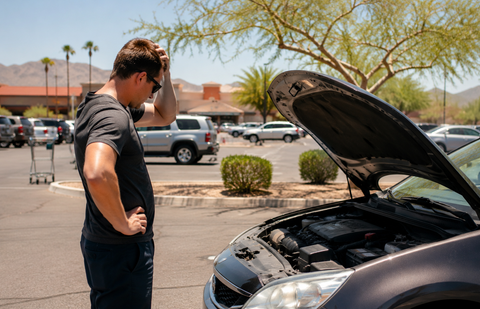
If you live in Phoenix, Arizona, then you already know all about the suffocating heat, the high summertime air conditioning bills from APS and SRP, and you probably already know that most Phoenix batteries don't die in winter. They die in grocery store parking lots in July. Maybe you will get some cranking noises as the engine tries to come back to life, maybe the dome lights will flicker — or won't come on at all. In 2023, Arizona experienced a record of 31 consecutive days above 110°F. At Gemba Automotive, one of the most common calls we get is about drivers stranded because their batteries are dead and need a battery replacement. Every Phoenix summer, we see batteries fail almost overnight once temperatures stay above 110 degrees for several days in a row. It's not a myth, they really do die faster here in the Valley of the Sun, and a big reason for that is … you guessed it … the heat.
Alternator vs. Battery: What's the Difference?
It's a common misconception that the battery powers everything in your car, all the time. The battery and your alternator work together as part of the charging system. Your battery provides the initial burst of electricity needed to start the engine. Once it is running, your alternator takes over and powers all the electrical systems in the vehicle. As a bonus, the alternator also continuously recharges the battery while you are driving.
During peak Phoenix summers, both the alternator and battery are under extreme stress, and a failing alternator can damage even a healthy battery by undercharging or overcharging it. Here's how it works: if the alternator is not creating enough voltage, the battery must carry the electrical load on its own. Over time, this can drain the battery until your car will no longer start.
Extreme heat can also damage the voltage regulator inside the alternator, which may negatively affect the battery. If it overheats, it could struggle to manage the charging process which could cause it to overcharge the battery. We know what you're thinking: How is overcharging a battery a bad thing? Overcharging can significantly reduce battery lifespan by causing excessive heat buildup, fluid evaporation, and internal cell damage — problems already accelerated by Phoenix summer temperatures. Because these systems overlap, many drivers will replace a battery only to discover that the alternator is the real problem.
How to Tell if Your Alternator Is Going Bad
- Battery warning light stays on while driving.
- Headlights brighten and dim inconsistently.
- Electronics behave erratically while driving.
- Burning smell from under the hood.
- Vehicle stalls after the battery dies.
- Car may start with a jump but dies shortly afterward.
How Long Do Batteries Last in Arizona?
Car batteries hate extreme heat. Phoenix temperatures speed up the chemical reactions happening inside the battery, which causes internal wear much faster than in cooler climates. A battery rated to last five years in mild weather may only survive two to three Arizona summers. Heat speeds up the reaction, and in cooler climates, the charging system can keep things in balance. Battery manufacturers often rate a battery to last 5 years under standard test conditions of 77 degrees. The problem with that here in Phoenix is that the average temperature often exceeds the standard testing conditions for at least 6 months of the year. The problem is that Phoenix spends months far above standard testing temperatures. Under-hood temperatures can easily exceed 140 degrees on summer afternoons. That kind of heat dramatically shortens battery life.
Why Arizona Heat Damages Car Batteries So Quickly
Since car batteries use a chemical reaction to generate power, they are at real risk when 100-plus-degree days cause the fluids inside to evaporate. Evaporation reduces the amount of charge the battery can hold. As the fluid level decreases, it exposes other components of the battery to air and other elements, which leads to corrosion and a shortened battery life. So if you started the summer with an 80 percent battery capacity, you might be down to 50 percent by October.
How Air Conditioning and Short Drives Affect Battery Life
Not only does the Arizona heat directly affect your car's battery and fluids, but it can also put a ton of strain on the system, affecting overall performance. A great example of this is when you use the air conditioning on max pretty much non-stop from June through August. This essentially puts more wear and tear on the battery.
In Arizona's urban areas, city living doesn't require long commutes so drivers may take shorter trips to avoid the heat, or just because they don't have to go that far. Shorter trips can prevent the battery from fully charging, which can keep it at a low charge state for an extended amount of time. We see this a lot with vehicles that mostly make short trips around town during the summer. The battery never really gets a chance to recover.
How to Tell if Your Car Battery Is Going Bad
A car battery rarely dies all at once. If you pay attention to your vehicle, you will notice warning signs in the days, or sometimes weeks, leading up to a dead battery. Being able to identify some of these warning signs can save you from being stranded somewhere in the heat.
- Slow engine cranking.
- Clicking when turning the key or using the push-to-start button.
- Your headlights may dim slightly when idling.
- Electrical accessories are weak before the car starts.
- The dashboard battery light or charging system warning light may flicker or turn on.
- Your radio and car infotainment settings may reset themselves.
- Problems are worse after the vehicle sits overnight.
Any of these symptoms should be taken seriously, especially if the battery is more than two years old in a desert climate.
How to Protect Your Car Battery During an Arizona Summer
At Gemba Automotive, we have put together some expert tips to help protect your vehicle battery in Arizona's extreme summer heat and reduce your risk of a dead car battery:
- Park in the shade: Parking under the shade can reduce under-hood temperatures by as much as 30 degrees, helping protect your battery.
- Use a Battery Insulator: Battery insulators can help protect your battery from extreme temperatures.
- Clean your battery: Not only can corrosion build-up affect your battery's performance, but dirt and grease can trap heat around the battery.
- Check Battery Fluid Levels: Make sure your fluid levels are adequate and top them up if necessary.
- Regular Battery Checks: Regular maintenance checks can catch battery issues before they stop your car from starting.
How to Avoid Getting Stranded With a Dead Battery
When your battery dies, the only thing left to do is replace it. If you are stranded somewhere, it is best to have an emergency kit in the vehicle with extra water, snacks, and other necessities. The Phoenix heat is brutal on car batteries, and there is no way around that. If your current battery is more than two years old, get it tested before summer arrives. In Phoenix, battery problems usually don't give much warning once extreme heat arrives. Catching a weak battery early is one of the easiest ways drivers can avoid getting stranded during Arizona's hottest months.
Frequently Asked Questions About Car Batteries in Arizona
Why do car batteries die faster in Arizona?
Extreme heat accelerates internal battery wear, evaporates fluid, increases corrosion, and weakens the battery's ability to hold a charge.
What are signs my car battery is failing?
Common signs include slow cranking, clicking when starting, dim lights, electrical issues, corrosion, a battery warning light, or needing repeated jump starts.
How often should Phoenix drivers test their battery?
Phoenix drivers should test the battery before summer and again if it is more than two years old, starts slowly, or has been exposed to repeated extreme heat.